Semovita
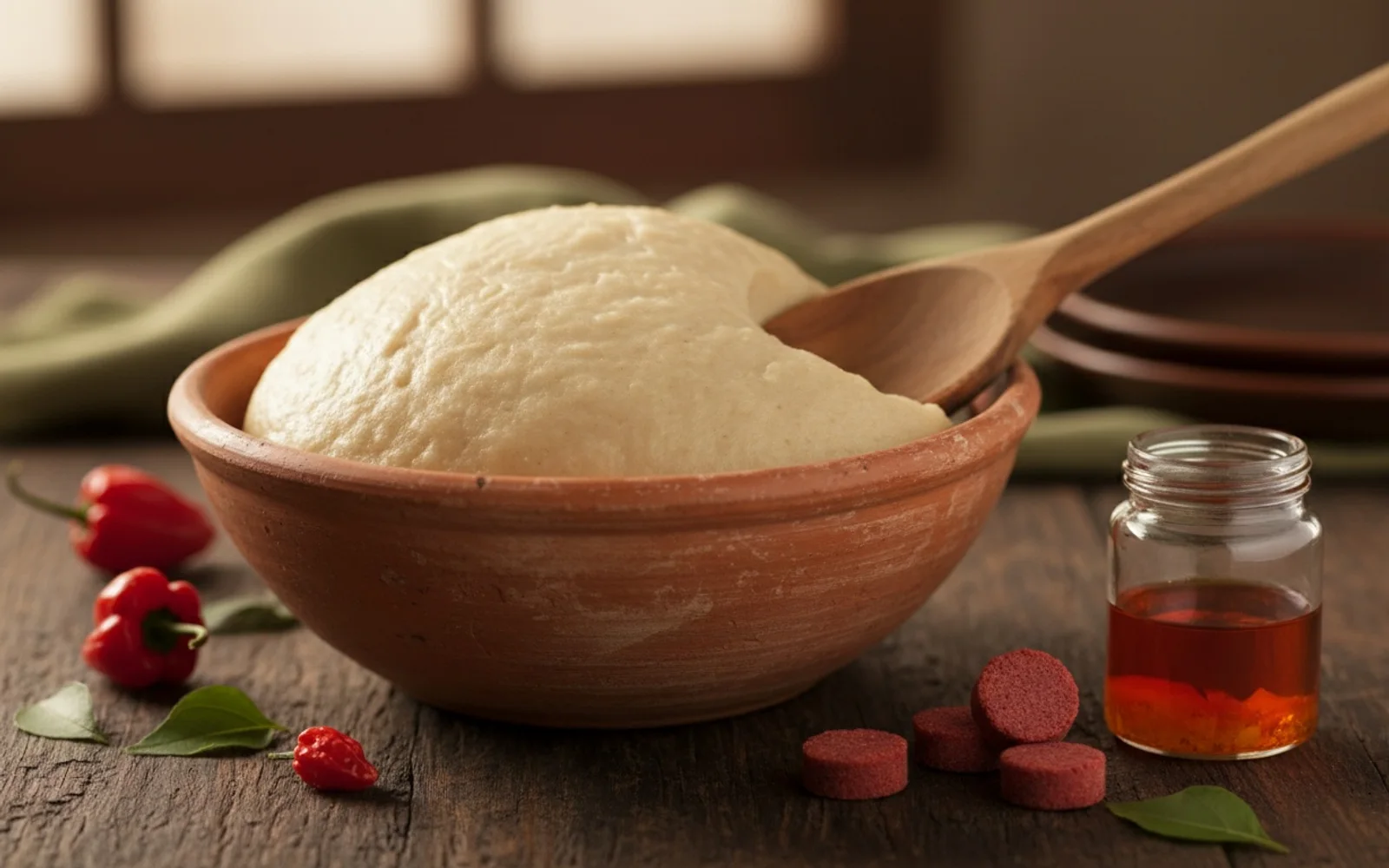
Semovita is commercial semolina flour cooked into swallow: milder than garri, smoother than amala, and forgiving for beginners learning swallow technique. Nigerian-American grocery runs often buy Semovita brand in the same trip as Maggi cubes and palm oil.
- Time
- 10 min
- Serves
- 4
- Patience
- Gentle
- Occasion
- Everyday
Where this dish comes from
Semovita rose in popularity from the 1980s as an convenient swallow option across Nigeria, especially in urban households. It is not 'less authentic': it is documented modern tradition.
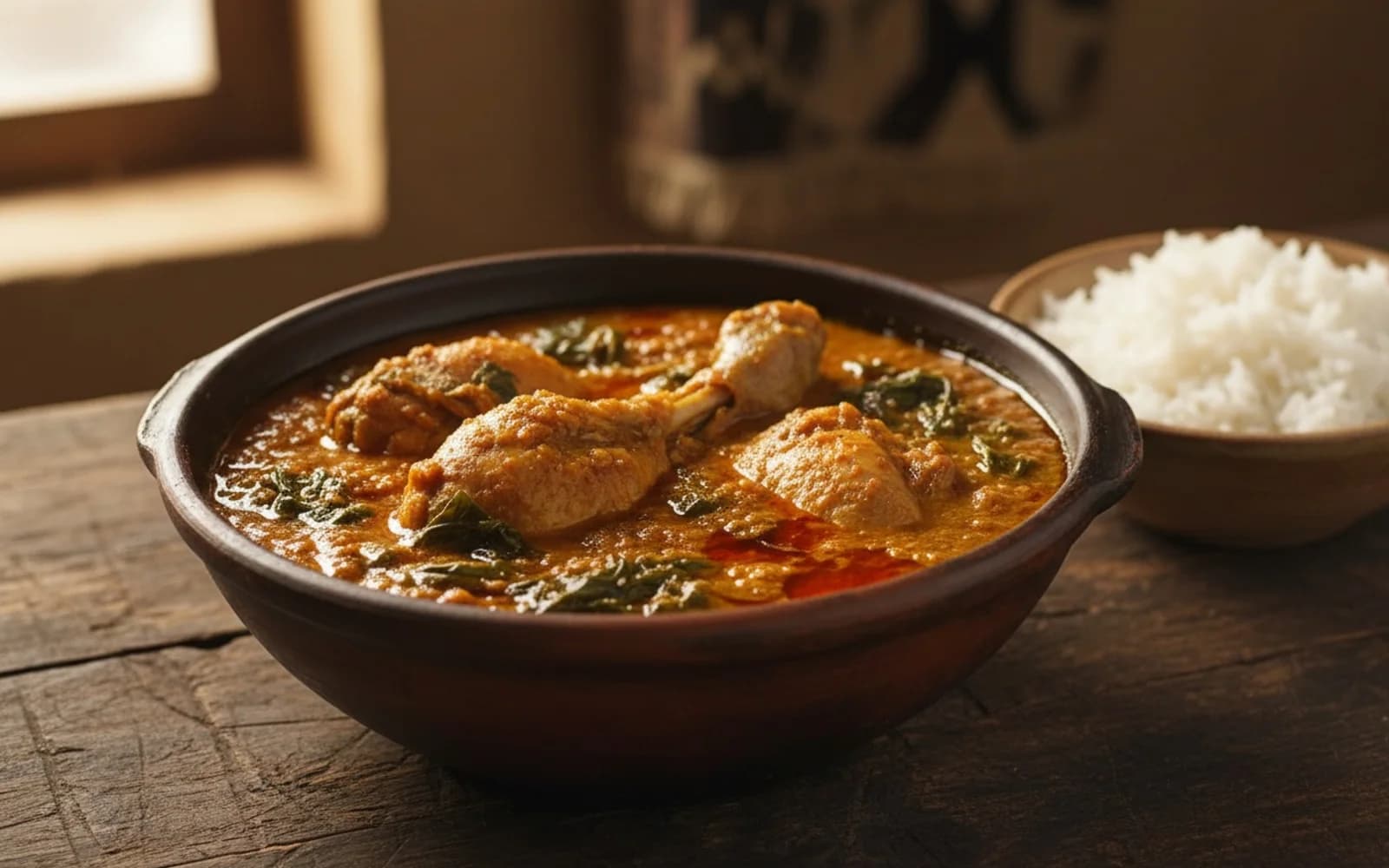
Swallow technique: same right-hand ball-and-dip method. Semovita is neutral-flavored and pairs with any thick soup: egusi, ogbono, okro, efo riro, or edikaikong. A first swallow for children learning: holds shape well.
Ingredients
- 2 cups (320 g) semovita or fine semolina flour
- 2 1/2 cups (600 ml) water
- Pinch of salt (optional)
The method
Step 1: Bring water to a boil. Reserve 1/4 cup (60 ml) cold water.
Step 2: Lower heat to medium. Pour semovita in a steady stream while stirring constantly.
Step 3: Stir 3–4 minutes until thick, smooth, and pulling away from the pot sides.
Step 4: Add reserved water if needed for softness. Cover 1 minute off heat.
Step 5: Shape into mounds. Serve with hot soup: egusi and okro are common pairings.
Family notes ✎
- Golden Penny Semovita is the reference brand many diaspora shops stock: other semolina flours may need different water ratios.
- Some families mix semovita with a little garri for sourness: a hybrid worth documenting if yours does it.
- Stir constantly while pouring flour: semovita sets in clumps if the stream stops mid-pour.
Substitutions
- Preferred: Golden Penny or Nigerian-branded semovita for predictable hydration.
- Emergency: Fine semolina from Italian grocery aisles; adjust water slightly.
- Emergency: Wheat flour swallow is a different product: do not substitute silently.
On the calendarWeeknight swallow when time and energy are both low.

Go deeper
The Nigerian-American Table
Nigerian home cooking for the diaspora kitchen: 51 recipes, a U.S. pantry guide, and the occasion behind every dish.
Get the guide, $29